
Predict. Optimize. Perform.
CFD Thermal Simulation Services
Eliminate thermal uncertainty — before your product ever hits the lab.
What Is Computational Fluid Dynamics (CFD)?
Computational Fluid Dynamics (CFD) is a simulation technique that uses numerical methods to study how fluids — such as air or liquid — flow and transfer heat. In real-world applications, engineers rely on CFD to model behaviors like airflow, pressure, and temperature distribution in complex systems.
At its core, CFD solves the Navier-Stokes equations, which describe fluid motion. To do this, the simulation space is divided into smaller parts — a process known as discretization. Typically, engineers apply methods like the Finite Volume Method (FVM), Finite Element Method (FEM), or Finite Difference Method (FDM) to perform this step.
Furthermore, CFD accounts for turbulence by using models such as RANS (Reynolds-Averaged Navier-Stokes) or LES (Large Eddy Simulation). These models help capture the unpredictable and chaotic nature of fluid flow. Once the boundary conditions are set, engineers run simulations and use post-processing tools to analyze results — such as temperature patterns or changes in flow speed.
CFD is used across many industries. For instance:
- Electronics – to simulate heat in PCBs, enclosures, and heat sinks
- Aerospace & Automotive – to improve aerodynamics
- Civil & Environmental Engineering – to study wind loads and pollution dispersion
- Biomedical – to model blood flow in arteries
As a result, CFD has become a vital tool in predictive engineering. By using it, companies can reduce the number of physical prototypes, lower costs, and speed up design decisions across different sectors.


Design Logics

Key Thermal Design Considerations
Effective thermal design involves managing heat transfer through conduction, convection, and radiation. To achieve this, engineers must carefully evaluate several factors — including power density, total wattage, material properties, and the surrounding environment.
In addition, multiple design constraints shape the overall thermal strategy. For example, engineers must consider noise limitations, long-term system reliability, and cost-performance trade-offs. Together, these factors influence which thermal management solutions are the most appropriate for a given application.
Ultimately, good thermal design balances performance, efficiency, and practicality — all while staying within system limits.
Ways of heat transfer
Environment resctriction
Power density
Wattage
Material used
Special concerns
Design Tools: Powerful Thermal Modeling with 6SigmaET
6SigmaET is a thermal simulation software built specifically for the electronics industry. Using advanced CFD technology, it enables engineers to model heat flow in PCBs, enclosures, and complete systems — both quickly and accurately.
Unlike general-purpose tools, 6SigmaET is tailored for electronic applications. As a result, it helps engineers identify and fix thermal issues early in the design process. Its intuitive interface and fast solvers make thermal modeling significantly more efficient. Moreover, its built-in component libraries minimize manual setup, reduce design iterations, and boost cooling performance.
Ultimately, 6SigmaET empowers engineers to design smarter, cooler electronics — while saving time and reducing development costs.
- Controllers – simulate smart control logic for thermal components
- Component Modeling – add and simulate realistic heat-generating parts
- PAC Study – analyze Package Airflow Characterization for better accuracy
- PCB Modeling – model multi-layer boards with true-to-life power maps
- Altitude Effects – evaluate thermal behavior under different air pressures
- Multi-fluid Capability – simulate various cooling fluids or air mixtures
- Modern User Interface – work faster with an intuitive, drag-and-drop layout

Complete Processes

At COFAN-USA, we understand the critical role thermal management plays in today’s fast-moving technology landscape. Without proper cooling, systems can overheat, become unstable, or fail prematurely. To help prevent these issues, we offer advanced CFD thermal analysis services that support the design of reliable, energy-efficient, and application-specific cooling strategies.
- Faster Time-to-Market: Accelerate development with expert-led CFD that minimizes delays and shortens product cycles.
- Optimized Performance: Improve cooling efficiency, reduce energy loss, and extend component lifespan.
- Customized Solutions: CFD models tailored to your system, from electronics to aerospace.
- Proven Expertise: 30+ years of thermal engineering experience applied to each project.
- High Simulation Accuracy: Reliable predictions of airflow, heat transfer, and temperature distribution.
- Cost Efficiency: Prevent late-stage redesigns and cut development costs through early analysis.
Choose COFAN-USA for CFD Thermal Analysis Solutions
Whether you’re developing cutting-edge electronics, transportation systems, or industrial equipment, COFAN-USA delivers accurate, scalable, and application-focused CFD simulations.
As a result, you can enhance system performance, improve reliability, and control development costs — all with confidence.
Applications

Aerospace & Aviation
- Aerodynamic optimization for aircraft and components
- Wing and fuselage thermal design
- Engine airflow simulation and heat analysis
- Cabin ventilation and environmental control
- Supersonic and hypersonic flow modeling
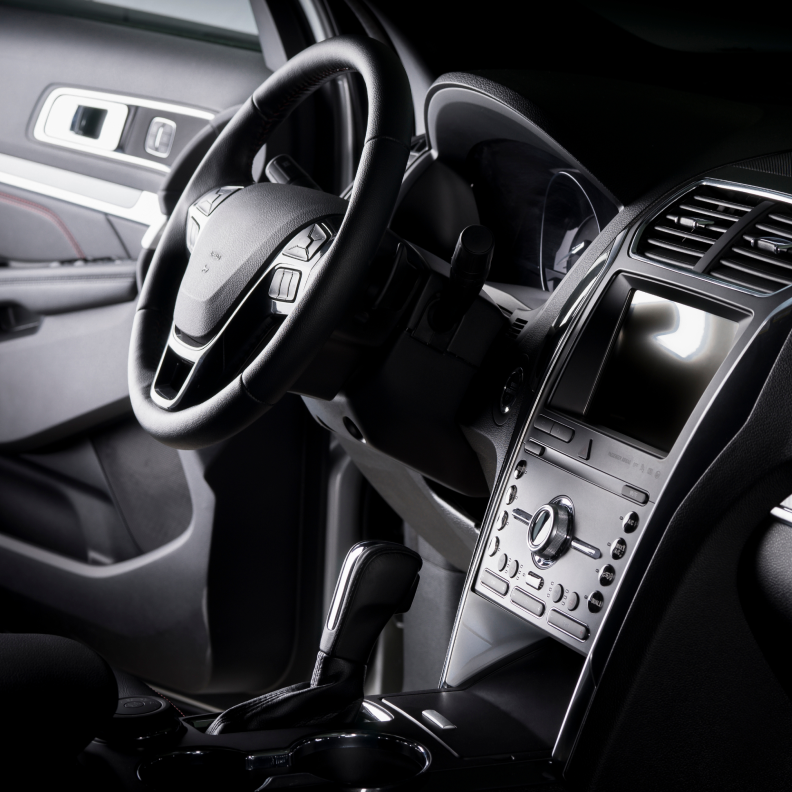
Automotive & Transportation
- Vehicle aerodynamics and drag reduction
- Cooling system optimization (engine, battery, and cabin)
- Thermal comfort and airflow in cabin environments
- Brake cooling and exhaust heat dissipation
- System-level thermal performance modeling

Electronics
- Heat sink and vapor chamber performance simulation
- Thermal management of PCBs, GPUs, CPUs, and power modules
- Airflow optimization in server rooms and enclosures
- Thermal runaway risk mitigation in battery systems

Biomedical & Healthcare
- Airflow analysis in hospital and cleanroom environments
- Drug delivery and inhaler flow simulation
- Hemodynamic modeling of arterial blood flow
- Ventilator and respiratory system design

Energy & Power Generation
- Aerodynamic optimization of wind turbine blades
- Combustion modeling in gas turbines
- Thermal management of solar panels and IGBT modules
- Hydrodynamic analysis in nuclear reactor systems

HVAC & Architecture
- Indoor air quality and ventilation efficiency
- Smoke and fire propagation modeling
- Wind load simulation on building structures
- Energy optimization and thermal comfort analysis